Visualization
Visualization – is a mental practice or simulation of an event, basically you suggest a certain reality to your mind. There are a lot of books tell you simple truths “If you dream of it really hard – you’ll achieve it!” or something like that. While that seems to be true, that is not enough to perform the visualization exercise in a right way, actually, very few people know how to do that right and how to apply it.
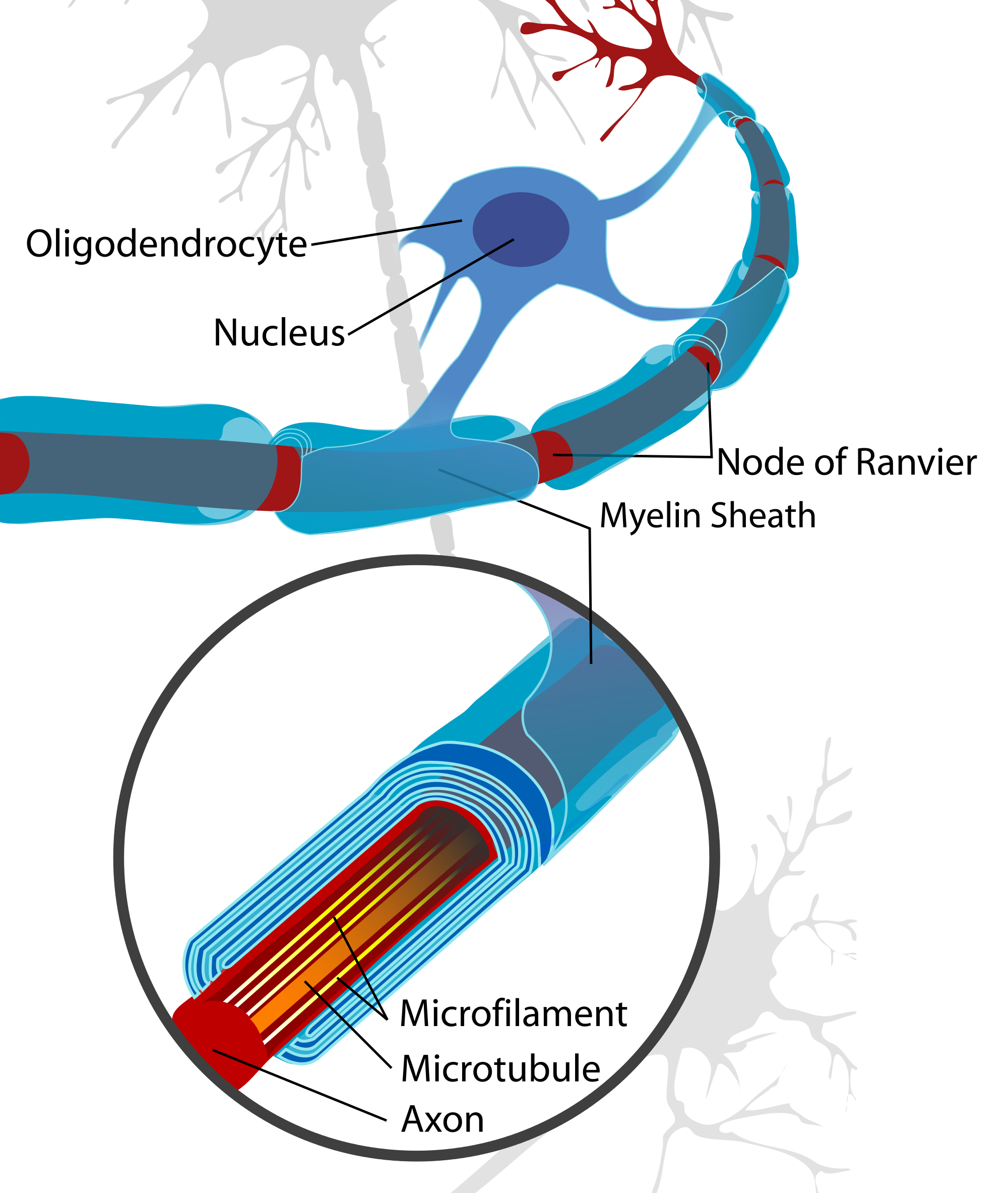
Before moving on to explain any details, there are a couple of things that should be clarified. If you’ve read The Talent Code by Daniel Coyle, you already know that skill is a cellular insulation that wraps neural circuits and grows in response to certain signals. This means that if you repeat your tennis serve over and over again, you engage the corresponding parts of your brain repeatedly. You spark the same neural circuits again and again, which forces the brain to produce more insulation (also known as myelin) around these particular circuits. That insulation helps to avoid signal loss because neural signals are essentially electricity, resulting in an improved tennis serve skill. However, at its core, our brain cannot distinguish between reality and imagination. This means you can trigger the same neural circuits through a proper visualization exercise, allowing mental practice to reinforce deliberate practice. There is a famous study by Australian psychologist Alan Richardson that compared the progress of basketball players shooting free throws. The first group performed actual free throws in the gym, the second group practiced proper visualization exercises, and the third group did neither. The results were as follows: the first group improved by 24%, the second group by 23%, and the third group showed no progress. This demonstrates that visualization is a very powerful tool, provided you know how to use it properly. While visualization is relatively new in the context of trading, it is widely used in sports (most Olympic athletes have psychological coaches, and 80% of what they do with them involves visualization exercises) and therapy (where it is used to treat phobias).
Most common uses of visualization in trading context:
- Suggesting good trading behavior and best practices
- You practice mentally being at work at the right time
- Going through your preparation routines
- Being calm and disciplined during market hours
- Sticking to your plan during the trade
- Review your performance at the end of the day
- Setting goals
- Imagine yourself achieved a goal
- Visualize how it actually happened by consistently following best practices over time
- Managing emotions
- Practice maintaining the right emotional state, as your emotions can shift when money is on the line.
- Practicing proper reactions to challenging situations, for example, when you lose money, visualize staying composed instead of getting angry or upset.
Visualization guide
First of all, you can’t visualize “wrong.” For example, think of a dog right now. Each person will imagine a different picture of a dog—someone might picture a collie, another might think of Scooby-Doo. There’s no right or wrong in what you visualize. If you’re asked to identify a place where you feel your future is, and you can’t sense it, simply choose the first direction that comes to mind—that’s where it is.
Mediatation (relaxation exercise)
Suggestions stick more easily when you are relaxed, calm, and able to focus. If you are busy or distracted, it’s not the right time for the exercise. If you already practice meditation, visualization is a great complement since you’ll be relaxed anyway. If you don’t, you can use this simple relaxation exercise:
- Find comfortable place (recliner/sofa/bed)
- Become aware of tensions in different parts of your body and remove them
- Scan your body from the top of your head down to your toes by gently triggering the corresponding muscles. This will help you identify areas of tension.
- Use your hands to locate and massage tense areas, such as your jaw or shoulders, which are often tight.
- Move around a bit—bend, twist, or stretch. This can help you find and release tension, especially in your back.
- Start deep breathing
- There are many ways to breathe deeply; find the method that works best for you. The goal is to lower your pulse rate
- You can inhale quickly through your nose and exhale very slowly through your mouth
- Alternatively, inhale and exhale deeply and slowly at your own pace
- Try square breathing (look it up online). Again, use whatever technique feels most effective for you
- Mentally count the lengths of your inhales and exhales to help maintain focus
- Try to avoid thoughts
- Shift your focus to your breathing without changing it—just be aware of it. When a thought pops up, gently redirect your focus back to your breathing
- Don’t be hard on yourself if you can’t avoid thoughts, when you notice you are thinking about something just get back to counting your inhale and exhale lengths
- Human mind generates 60k-80k thoughts per day, that’s around 1 thought per second, it’s a good result when your mind is clear as long as 3 seconds
After 5–10 minutes, you should feel a lighter head. That’s the ideal time to move on to your visualization exercise.
Suggesting good trading behavior and best practice
A mental walkthrough of your daily routines and best practices is one of the most effective visualization exercises. You want to visualize what it’s like to have a good trading day as a trader, focusing on doing everything the right way. This exercise is not about PnL, numbers, or probabilities—just about the process:
- Visualize yourself arriving at work early, feeling relaxed, focused, and in a good mood.
- Imagine yourself performing your morning preparations: looking at the markets, making notes, reading the news, writing down key levels, and brainstorming ideas.
- Picture the market opening. Visualize yourself reacting calmly to the opening prices, placing the right orders, and executing your trading plan as the market aligns with your criteria.
- Imagine yourself entring the trade
- Imagine a position going against you, it’s ticking, ticking and triggering you stop loss price, you get out, no regrets, no emotions, just a losing trade
- Similarly, imagine taking profits. Price moves toward your target, or another valid reason to exit arises, and you take profit in a disciplined manner.
- Finally, picture the market closing. See yourself reviewing your trades, filling out your trading journal, noting the levels to watch in the future, setting alerts, and then closing everything. Visualize yourself leaving the desk with a sense of accomplishment, knowing you worked hard and became a little better today.
Enhancing emotional impact
The way you represent an image in your mind greatly influences your mind-body connection. For example, a movie has a stronger emotional impact when you watch it on a big screen with good sound. Here are some tips to enhance your visualization so it has a greater emotional impact:
- Use dissociation, imagine watching yourself doing something, as if you’re watching a movie of yourself in action. This technique is often used to treat phobias. For example, if a patient has claustrophobia, they might imagine themselves taking an elevator from the 1st floor to the 2nd, observing their reaction in a third-person view to show the absurdity of the fear.
- Make movie with yourself resonate with you
- Expand the image as though you’re watching it on an IMAX screen.
- Add post production, visualize your experience like a high-quality movie—enhance the brightness, enrich the colors, and add effects that make it more vivid and personal
- Add sounds, add background music that energizes or inspires you. Include sounds that align with your goals, such as the beeping of a cash machine or an ATM when you take profits. Add self-talk or imagine a call from a friend saying, “You’re doing a great job.” Be as creative as you like.
- Add feelings, This is a more advanced step. Recall moments when you felt nervous or tense, like during an exam or an interview. Reflect on how it felt—was it like butterflies in your stomach, a spinning sensation in your chest, or a tense, cold feeling in your back? Once you recognize these feelings, visualize their “antidote.” For example: imagine the butterflies flying away from your stomach or Visualize the spiral spinning in the opposite direction to neutralize the sensation or picture your back glowing with warm light, easing the tension and replacing it with comfort.
Setting goals
It’s not hard to imagine goals. For example, think of your birthday or New Year’s celebration coming up—you can easily create an image of your party in your head. This same mental process can be used to your advantage: set a goal in the future, suggest to your brain that it’s a great idea, and visualize yourself achieving it.
- Goals must be:
- Measurable
- With time frame
- With evidence of achievement
- That means you imagine yourself at the end of the quarter, looking at your statement which shows you number 20% higher (or X amount of $)
- Your brain stores memories in what’s called a timeline. Relax and become aware of where you perceive your future to be. Most people feel the future is somewhere in front of them. Identify this spot—this is your “future location.” Now identify your current location and connect the two with an imaginary line. This will help you mentally “travel” from the present to the future to achieve your goal.
- Relax, become aware of your goal, what does it look like, enhance emotional impact by boosting colors etc.
- What do you feel? Are you happy or relaxed or do you feel monkeys off the back or you feel exited or you feel success.
- Look back in time to your present and think about all the things you did to get there – in order to get to up 20% you need to be up 10%. How your PnL line moved, maybe you was patient and waited for the best opportunities and your PnL line gaps up to 10% and then to 20%, or maybe you was consistent and traded small and your PnL slowly climbs up. You make it more real to yourself because you are feeling this details about the whole experience, how it really happened through the way.
- You also want to imagine all the changes that would get you to that point. So maybe you were not that serious about your preparation or reviewing to that point. And you imagine that you started to prepare or review much more seriously so you spotted best opportunities and managed risk better with bigger size.
By doing this exercise, you’ll start thinking about your PnL in terms of monthly performance rather than daily fluctuations, which helps you feel more relaxed. This practice will also increase your attraction to your goal, making it feel more tangible and achievable.
Managing emotions
You can shift into positive emotional states, including a peak performance state like “being in the zone” whenever you need.
- After the relaxation exercise, reconnect with your experience of peak performance, like when you were writing an exam you were super prepared for, and you were writing answers, and everything just flowed. Or, like when you crushed the game and were winning against good opponents left and right in that state of flow. Recall that experience—imagine what you felt, what you saw, and what you heard
- Experience that peak performance version of yourself, then imagine that peak performance version of you with some kind of circle around you. Maybe your circle is glowing or pulsating underneath your representation, or maybe you imagine the circle made of green grass. Visualize whatever feels right for you.
- Imagine stepping out of the circle but leaving all those feelings of peak performance within it. Now there is a peak performance circle—a peak performance zone—so when you are in it, you are literally “in the zone.”
- Now, imagine the trading version of yourself with all the good traits you possess as a trader: your preparation, your conviction in your system, your understanding of trading. Visualize that trading version of you stepping into the circle. Now the trading version of you is taking all the feelings and resources of being in the peak performance zone. Imagine how it would feel, how the trading version of you with all those resources and flow state would feel. How much better would you trade? How much more confident would you be? How much better would your profitability and focus be? How much better would you feel?
- Set up a trigger so you can practice stepping into the circle and being in that peak performance state whenever you want. It can be snapping your fingers or saying a specific phrase. When you trade and lose focus, use your trigger to bring yourself back into the zone.
gl hf